
One of the most common questions we get from students is, “Are traffic violations misdemeanors?” The answer is both yes and no. “Traffic violation” is a broad term that covers infractions, misdemeanors, and felonies—basically, any traffic-related offense.
A misdemeanor, on the other hand, is more serious than an infraction but less severe than a felony. All traffic misdemeanors are violations, but not all traffic violations are classified as misdemeanors. Let’s break down the differences between the two.
Traffic Violation vs. Misdemeanor: Know the Difference
A traffic violation is any action that goes against the rules set to keep drivers, cyclists, and other road users safe. Some examples include speeding, tailgating, DUIs, or reckless driving. These fall into three categories based on their severity:
- Infractions: Most traffic violations are infractions, such as running a red light, making unsafe turns, or failing to yield. An infraction is a minor offense punishable by fines and demerit points. Unless you decide to fight the ticket, there’s no need to go to court.
- Misdemeanors: Misdemeanors are more serious traffic violations and, in some cases, can be treated as felonies. They’re considered criminal offenses and may result in license suspension, demerit points, jail time, or probation. An example would be reckless driving or street racing.
- Felonies: Vehicular homicide, repeat DUIs, and reckless driving causing bodily injury or death are typically charged as felonies. These offenses are more serious than misdemeanors or infractions and carry harsher penalties.
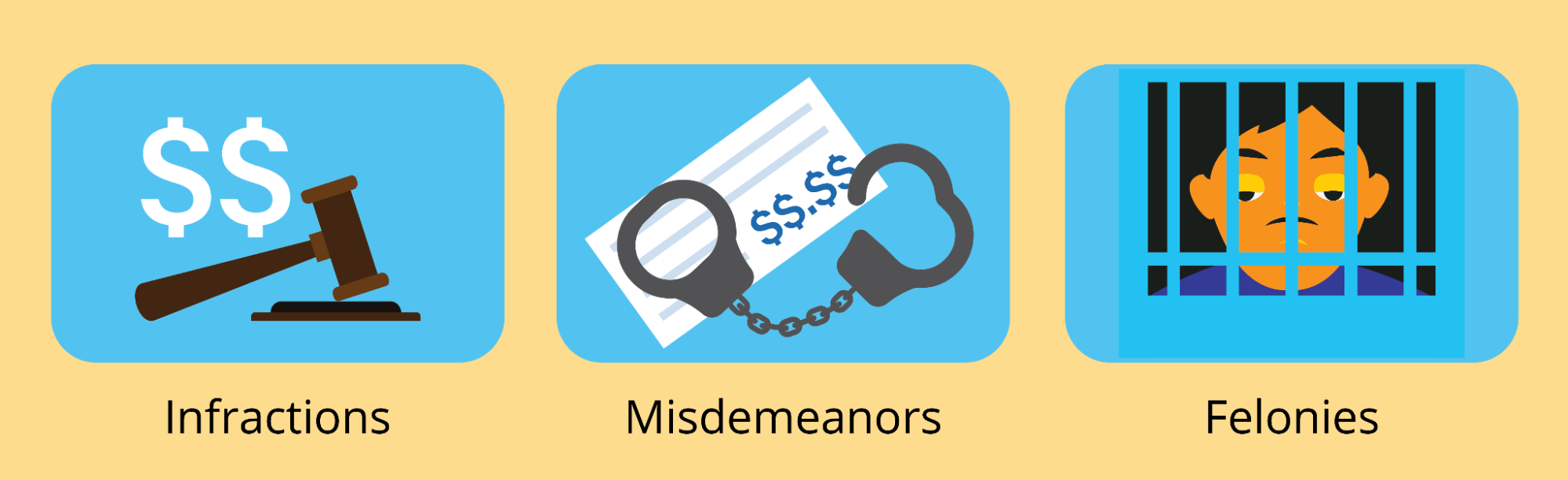
Generally, traffic violations are most often classified as infractions and less commonly as misdemeanors or felonies. Unlike infractions, misdemeanors and felonies carry criminal charges.
See the table below to better understand how they differ.
| Types of Traffic Violations | ||
|---|---|---|
| Violation Type | Nature | Potential Consequences |
| Infraction | Civil |
|
| Misdemeanor | Criminal |
|
| Felony | Criminal |
|
Traffic school can help you keep a clean driving record, prevent insurance increases, and more!
How to Tell If Your Traffic Ticket Is a Misdemeanor

Your citation, or traffic ticket, indicates whether you’re charged with an infraction or misdemeanor. Review both sides carefully and follow these steps:
- Check the type of violation: If the offense is a misdemeanor, you’ll see the letter “M” marked or circled next to the violation listed on your ticket. This is your first clue about potential consequences.
- Review the violation code: Your ticket will also list a code that refers to the specific law you allegedly violated. Look up the code online to understand the severity and typical penalties.
- See if a court appearance is mandatory: Drivers charged with misdemeanors must go to court to enter a plea. In such cases, the citation will clearly state that a court appearance is mandatory.
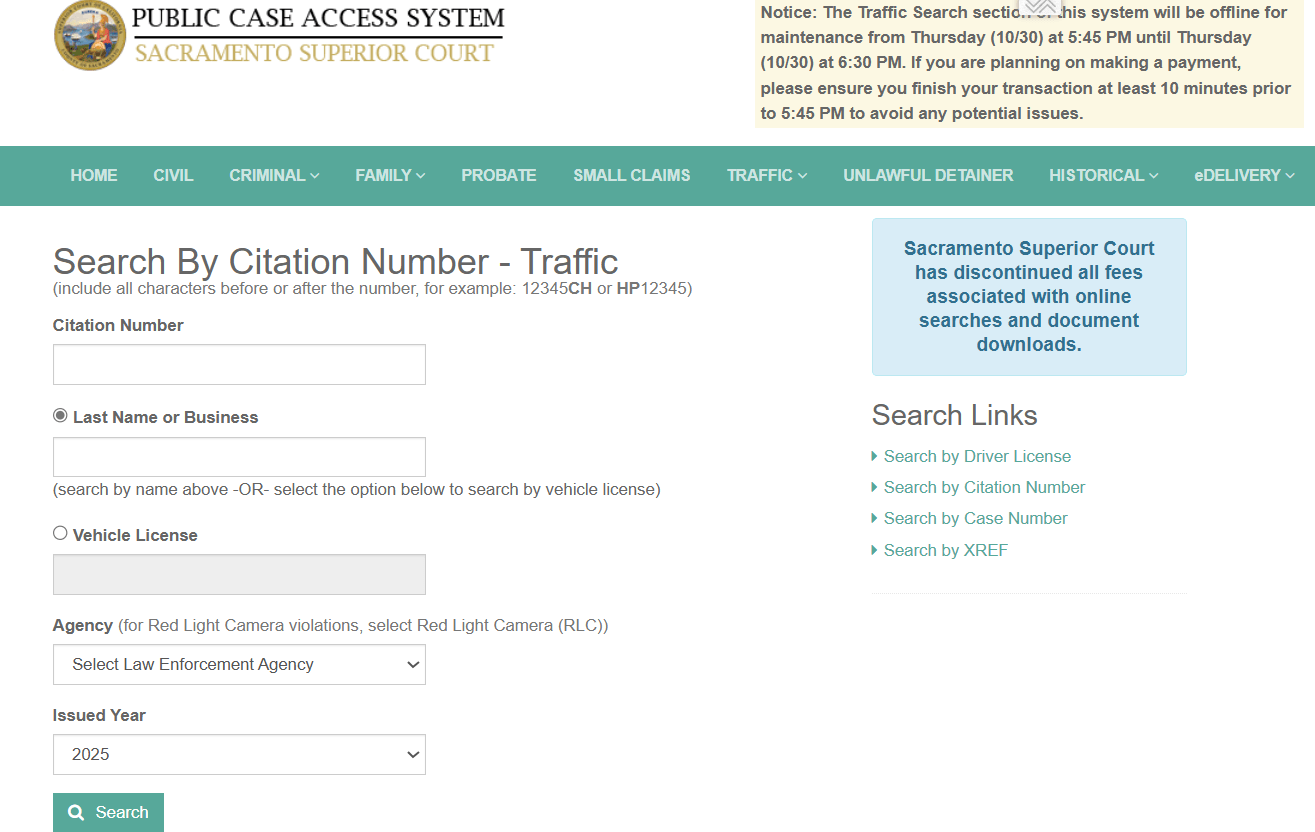
- Search your case online: Most California courts have online databases where you can look up your case. Enter your citation number to check the charges, court date, payment options, and other details.
How Long Do Infractions and Misdemeanors Stay on Your Record?
The California Department of Motor Vehicles (DMV) assigns one or two points to each moving violation based on its severity.
Infractions add one point to your driving record for three years, while misdemeanors carry two points and can stay on your record for seven years or more. Felonies remain on your record indefinitely unless expunged or sealed.
For instance, disobeying traffic signs is an infraction punishable by one point. The conviction stays on your California driving record for 39 months, resulting in higher insurance rates.
If you’re convicted of a DUI, hit-and-run, or reckless driving, you’ll get two points on your record. These points remain for 10 years. Less severe misdemeanors, such as driving with a suspended license, expire after seven years.
For more information, see our guide on how long points stay on your record.
Do Misdemeanors Show Up on Background Checks?
In California, a misdemeanor creates a criminal record and stays on it indefinitely unless the conviction is dismissed, expunged, or sealed. Employers and other third parties can see misdemeanor convictions on background checks going back seven years.
Suppose you apply for a job as a delivery driver. After making a conditional offer, the employer runs a background check and discovers a conviction for reckless driving from two years ago.
They will then review the offense, assess its relevance to the job, and evaluate whether your behavior poses a safety risk. Based on these aspects, they may choose to hire you or withdraw the offer.
Infractions, on the other hand, appear only on driving records and don’t show up on criminal background checks. However, they’re still visible to insurance providers, potential employers, and other parties that can access your driving history.
One solution is to attend traffic school to mask the point associated with your infraction. Upon course completion, the conviction is hidden from car insurers and other third parties, helping you maintain a clean driving record and keep your premiums from increasing.
Read: Is Traffic School Worth It?
What to Do If You Get a Traffic Ticket in California?
The steps you’ll need to take after receiving a traffic ticket depend on the type of charge. Here are your legal options based on whether you’re accused of an infraction or a misdemeanor.
What to Do If You’re Charged with a Misdemeanor
Misdemeanors are considered criminal offenses and involve a complex legal process. These traffic violations fall under criminal court jurisdiction.
Drivers charged with serious misdemeanors, such as hit-and-runs, are usually taken into custody. However, that’s not always the case for less severe offenses, like driving without insurance.
Once released from custody, you’ll receive a court date. If you don’t show up, you may be charged with failure to appear, and a warrant could be issued for your arrest.
Next, your case will proceed through several stages in the following order:
- Arraignment: This is the initial hearing during which a judge presents the charges against you. Depending on the circumstances of your offense, you can plead guilty, not guilty, or no contest.
- Bail hearing: If you’re in custody, the judge may allow you to post bail so you can be released before trial. Bail serves as a guarantee that you’ll return to court.
- Pretrial phase: During this stage, your attorney and the prosecutor exchange evidence, negotiate plea deals, and prepare arguments. If a plea deal is reached, you won’t need to go to trial.
- Jury trial: If no agreement is reached, you’ll appear before a judge or jury. Your lawyer and the prosecutor will present evidence and witnesses, and then the judge will make a verdict.
- Appeal: If you’re found guilty, you may file an appeal to challenge the verdict. The appellate court will review your case and the trial record to make a decision.

Once you’ve completed the terms of your conviction and are no longer on probation or parole, you may file for expungement.
If approved, the case will appear as dismissed on your criminal record but will remain on your driving record. The advantage of clearing your criminal record is that it can make it easier to find a job, get a loan, or rent a house.
California drivers convicted of misdemeanors may also ask the court to dismiss the charges.
To qualify, they must have completed probation and have no new cases pending. Like expungement, this option removes the conviction only from your criminal record. Some misdemeanors, such as driving without a valid license, may be reduced to infractions.
What to Do If You’re Charged with an Infraction

When you’re pulled over for a traffic infraction, the police officer will issue a ticket and tell you what you did wrong. After that, you’ll have to pay a fine. Drivers caught by a speed camera may receive the ticket by mail.
Moving forward, you can pay the fine before the due date listed at the bottom of your ticket or contest it by pleading not guilty. Let’s see what each option entails:
- Pay the fine: If you go this route, you won’t have to go to court. The downside is that it means you admit guilt, so the points will go on your record.
- Plead guilty and go to traffic school: In some cases, you may be better off paying the fine and pleading guilty. The court may allow you to go to traffic school, which would keep points off your record. As a result, the offense won’t raise your insurance premiums. (Use our speeding ticket calculator to see whether your infraction qualifies for traffic school.)
- Contest the citation: A driver who believes he’s not guilty and has the means to prove it can challenge the citation in traffic court. This involves requesting a court date and presenting the case before a judge. Alternatively, you can file a trial by written declaration, which involves submitting a written statement along with supporting evidence by mail.
Generally, it makes sense to go to court if you have enough evidence to support your case. For example, someone accused of running a stop sign may present photos of a tree blocking the stop sign to prove their innocence.
With this option, you may hire a traffic lawyer and go to trial. However, if you’re found guilty, the points will appear on your record. You’ll also need to pay the fine and court fees, which can run into hundreds or thousands of dollars.
Final Thoughts
While both infractions and misdemeanors can result in demerit points, infractions carry less severe consequences and don’t create a criminal record. Most traffic violations fall into this category, and you can attend traffic school to “mask” them from your driving record.
Traffic school is a course you can complete online or in person in eight hours or less, depending on its format. If you choose to study online, you can finish in just two or three hours.
In California, drivers can go to traffic school no more than once every 18 months. Check out some more details on traffic school eligibility.
Note that misdemeanors don’t usually qualify for traffic school. Make sure you contact an attorney to review your legal options and avoid further consequences.
FAQs About Traffic Violations vs. Misdemeanors
Is there anything else you want to know about traffic violations vs. misdemeanors? Here are the answers to some frequently asked questions.
Will a misdemeanor stop me from getting a job?
Not necessarily. A misdemeanor conviction doesn’t automatically disqualify you from employment unless it’s directly related to the job you’re applying for.
Additionally, if the conviction is more than seven years old, it likely won’t appear on background checks. You may also be able to get a misdemeanor expunged or sealed from your criminal record, so it’s worth investigating these options.
Can employers see your tickets?
Potential employers can access your DMV record and view your tickets if you apply for a job that involves driving. Consider attending traffic school after receiving a ticket to prevent it from appearing on your record.
Can you pass a background check if you have a misdemeanor?
Yes, you can be charged with a misdemeanor and still pass a background check if:
• You were arrested but not convicted (unless the case is pending).
• The conviction is older than seven years.
• The conviction has been expunged or sealed.
• You received a pardon for the conviction.
Note that California’s “Clean Slate” laws, outlined in Senate Bill No. 731, allow for the automatic sealing of criminal convictions, including misdemeanors.
To qualify, you must have completed the terms of your sentence and maintained a clean record for at least one year following the conviction. If these conditions are met and the conviction is sealed, it will no longer appear on background checks.
What are the three types of misdemeanors?
Under California law, misdemeanors fall into three categories: standard, gross, and aggravated.
• Standard misdemeanors, such as driving with a suspended license, are punishable by up to six months in jail and/or a fine of up to $1,000.
• Gross or aggravated misdemeanors can result in fines of up to $1,000 and/or up to one year of imprisonment. An example is reckless driving resulting in bodily injury or death.
For instance, reckless driving is considered a standard misdemeanor and punishable by five to 90 days of jail time and/or a court fine of $145 to $1,000. But if this behavior leads to bodily injury or property damage, it may be classified as a gross misdemeanor and result in additional charges.