
If you’re wondering how to get a speeding ticket dismissed in California, you have more options than you might think. Depending on your situation, you may not need to ever set foot in a courtroom. For example, you could fight the charges by mail instead of appearing in front of a judge.
In some cases, completing traffic school can be the best way to go. This path allows you to mask a one-point moving violation, which is different from ticket dismissal. However, it has a similar outcome. There’s no new points on your record and no insurance rate hikes.
Here’s what you should know about masking versus dismissing a speeding ticket, plus five legitimate ways to resolve your citation.
Masking vs. dismissing a speeding ticket: What’s the difference?
California drivers have two options for dealing with a standard one-point speeding ticket: dismissal or masking.
- Ticket dismissal means the court drops the charge entirely. There’s no conviction, no point added to your DMV record, and if you already paid bail, you get a refund. This is the outcome you’re aiming for with a Trial by Written Declaration (TWD) or an in-person court trial.
- You can also “mask” your ticket through traffic school. Upon course completion, the conviction is recorded at the court level, but the point doesn’t appear on your California driving record. Therefore, it’s not visible to auto insurers, potential employers, or other third parties.
Either approach can help prevent your insurance rates from going up after a ticket. Traffic school makes it possible to achieve this outcome without the risk of losing at trial.
Still, fighting the ticket is worth considering—especially if you have a strong defense or a correctable violation on your citation.
Let’s compare these options so you can decide which one fits your situation.
How to get a speeding ticket dismissed in California: Five options to clear your citation
While there are several ways to clear your citation, each involves different steps and works better for some drivers than others. Here’s what to expect.
Trial by written declaration
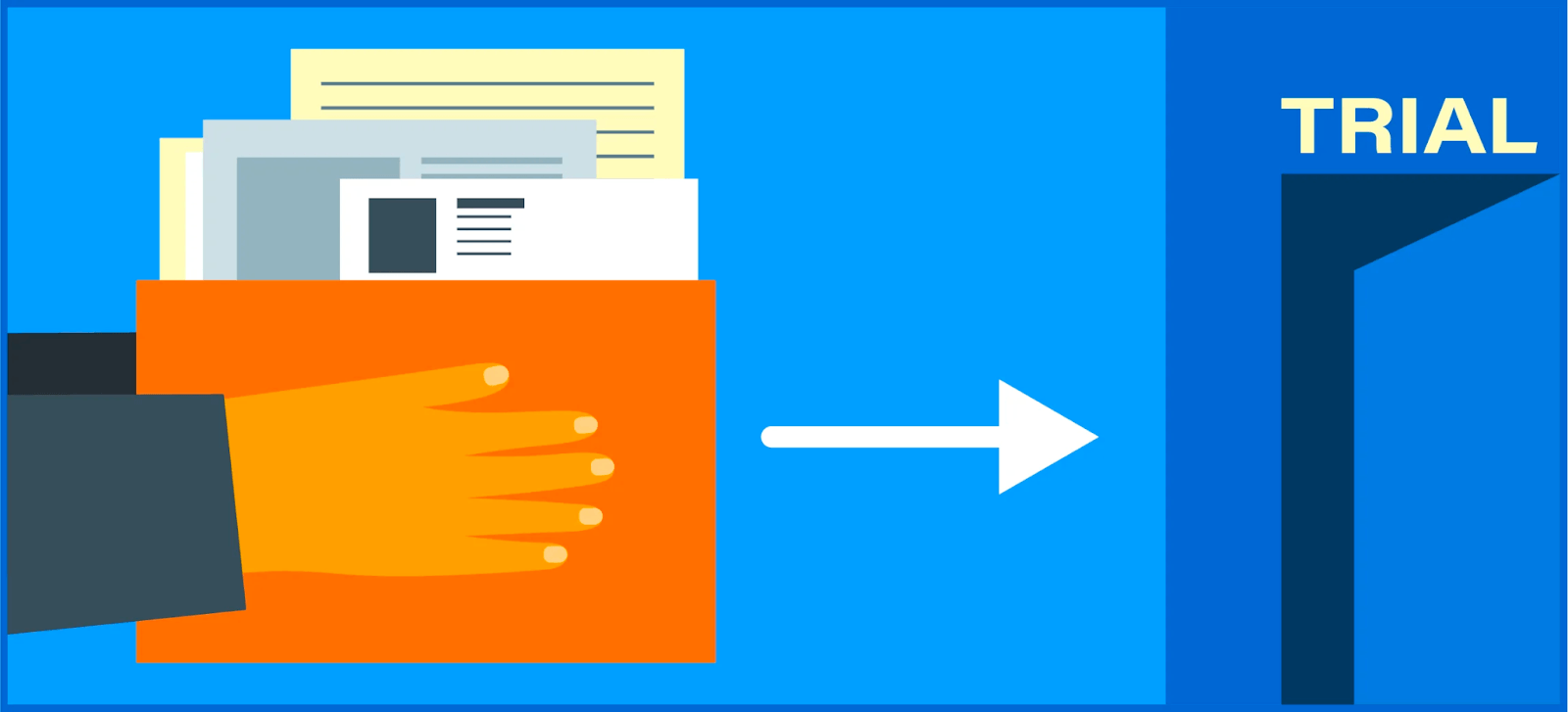
Fight the ticket online or by mail, no court appearance required.
A trial by written declaration (TWD) lets you contest a traffic ticket without appearing in court. With this option, you’ll present your case and any supporting evidence in writing, then submit your statement online or by mail—depending on the court.
Simply follow these steps:
- Request a TWD: Your citation or courtesy notice will include a due date. Before that date, contact the court and request Form TR-205.
- Pay bail: You’ll have to pay all fines and fees associated with your ticket by your citation due date. That’s called a full bail. If you win, the court refunds the bail amount.
- Submit a written statement: Describe what happened in clear, factual terms so the judge can understand your case. Include photos, traffic camera videos, dashcam footage, GPS logs, and other supporting evidence. Submit everything to the court by the due date on your ticket.
- Wait for the officer’s declaration: The officer who issued your ticket must also submit a written report. If they miss the deadline, your case is dismissed and the bail amount is refunded.
- Get the verdict: A judge reviews both statements and issues a decision by mail. If you lose, you can request an in-person trial, or Trial de Novo, within 20 days of the verdict. The court schedules the new trial within 45 days, giving you a fresh start, as if the TWD never happened.
This path is available to California drivers charged with traffic infractions. If you have strong evidence in your favor, it can lead to ticket dismissal—though the outcome isn’t guaranteed.
In-person court trial
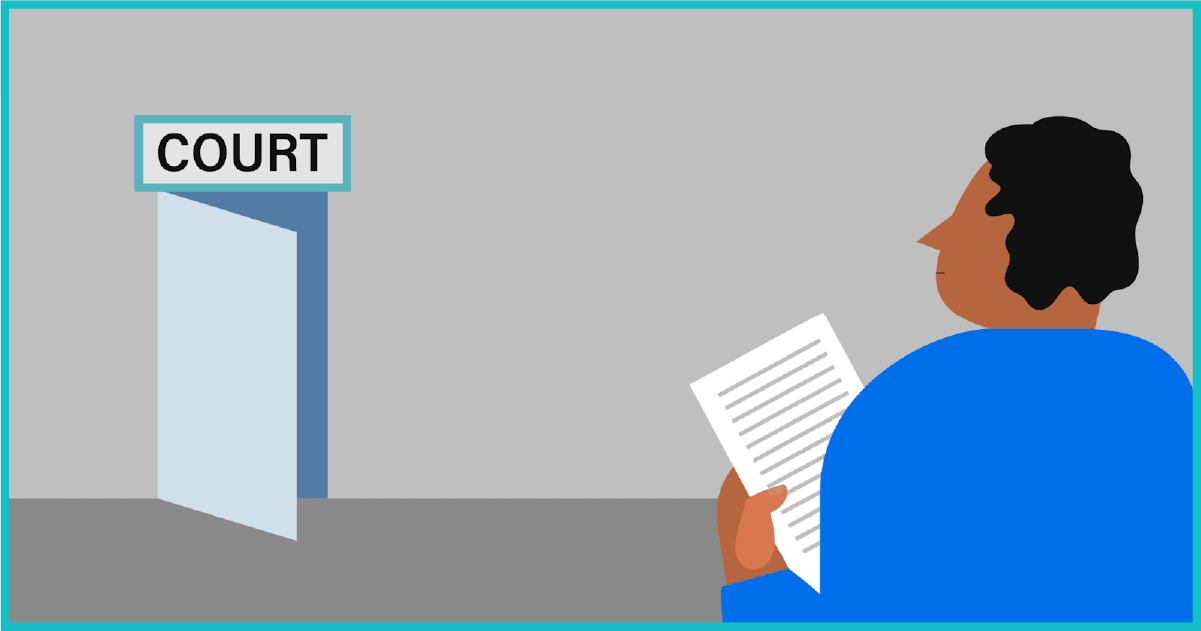
Challenge the evidence and present your case in front of a judge.
If you’d rather make your case in person, you can request a court trial. This option may be a better fit than a TWD for drivers who rely on oral evidence, such as eyewitness testimony.
To get started, contact the court before your due date and plead not guilty. The court will schedule a trial date and subpoena the officer. From there:
- Gather supporting evidence: Collect photos, dashcam footage, witness statements, and other evidence in your favor. For example, if you’re challenging the accuracy of the radar or lidar device used to measure your speed, calibration records can help support your case.
- Make your case: Explain what happened, present your evidence clearly, and walk the judge through any documentation you have.
- Know the odds: If the officer appears and your evidence is solid, a dismissal is possible but not guaranteed. If the officer fails to appear, the judge may dismiss your case.
An in-person trial is stressful, but it can be a good choice if you believe the citation was issued in error and have the evidence to back it up. If you’re not confident in your defense, traffic school is a lower-risk way to achieve a similar outcome.
Correctable violations
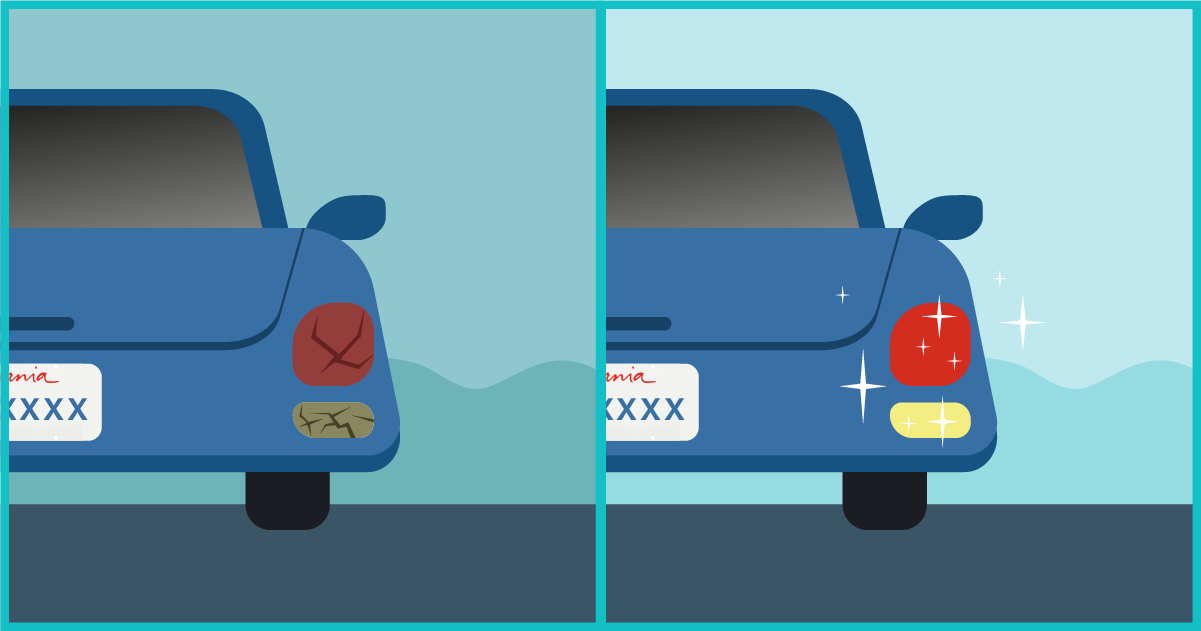
Guaranteed dismissal if your ticket includes a correctable violation.
Speeding isn’t a correctable violation, so you can’t simply fix it and have the charge dropped. However, if your citation includes a secondary violation that’s correctable, you can have that specific charge dismissed. Common examples include a broken taillight, an expired registration, or not having proof of insurance when you were pulled over.
In such cases, the “Correctable Violation” box on your ticket will be checked. Here’s what to do next:
- Fix the problem: Address the correctable issue as soon as possible. Renew your registration, obtain proof of insurance, or repair any faulty equipment.
- Get proof of correction: Have the fix signed off by a law enforcement officer or other authorized official, depending on the violation.
- Note that proof of insurance is an exception, meaning that officers can’t sign it off. Bring a valid insurance card or other relevant documents to the traffic court clerk to show your vehicle was insured at the time of the stop.
- File with the court: Submit your proof of correction to the court before your due date, along with a $25 administrative fee.
Once these steps are completed, the court will dismiss the correctable violation. The speeding charge itself remains, and you’ll still need to address it through one of the other paths covered in our guide.
Traffic school
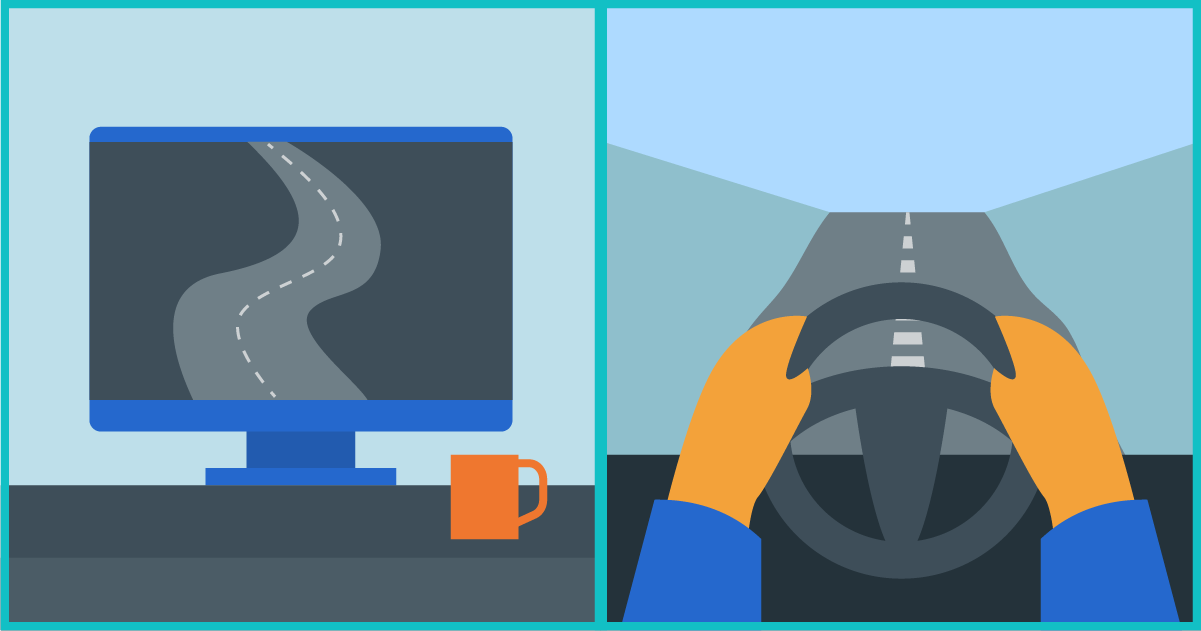
Mask one point on your driving record and prevent insurance rate increases.
In California, you can attend traffic school to mask one point on your driving record. The course is eight hours long, but online programs let you study at your own pace, and many drivers finish in as little as two hours. You can complete it online or in person.
Traffic school is worth it—and not just because it keeps points off your record. It also prevents insurers from seeing the point tied to your ticket, potentially saving you thousands of dollars in premium increases. Plus, it’s a quick, easy way to brush up on traffic laws.
To qualify, it’s necessary to hold a valid noncommercial driver’s license and meet the following requirements:
- The charge is an infraction, not a misdemeanor or felony.
- You didn’t exceed 25 mph over the speed limit.
- The ticket isn’t drug- or alcohol-related.
- You haven’t attended traffic school in the last 18 months.
If you meet all the eligibility criteria, here’s what to do next:
- Admit guilt: Plead guilty to the charge and ask the court for permission to attend traffic school. The court will confirm your eligibility and set a completion deadline.
- Pay the fine: Pay your fine plus the traffic school administrative fee, which varies between $49 and $74, depending on the county.
- Find a state-approved school: Choose a traffic school approved by the California Department of Motor Vehicles (DMV), or your certificate won’t be accepted.
- Complete the course: Work through the lessons, then take the open-book final exam, which requires a passing score of 70% or higher.
- Get your certificate filed: After you pass, the school will submit your completion certificate electronically to the court and DMV. Follow up with the court to check your case status, or ask the course provider if they offer that service.
The outcome? No point on your DMV record, no insurance impact, no uncertainty about the result. For eligible drivers, it’s the lowest-risk way to handle a traffic ticket.
A speeding charge can impact your auto insurance rates for three years or longer. Don’t let that happen. Start traffic school for free today.
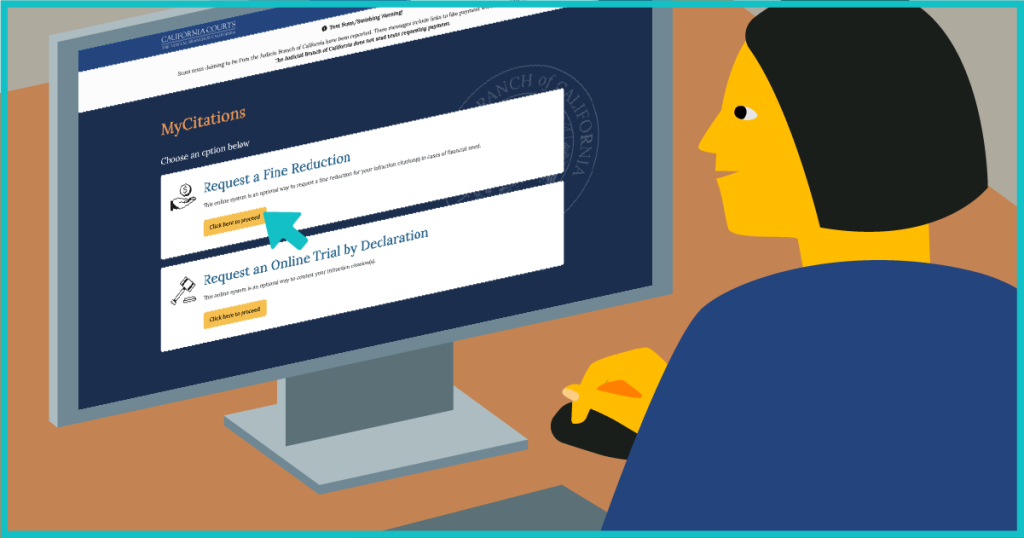
MyCitations fine reduction
Lower what you owe if the fine is a hardship.
If you can’t afford to pay your speeding ticket in full, you can get help via MyCitations. Through this platform, California drivers can request a fine reduction or alternative options.
The total cost of a speeding ticket ranges from $234 to $1,000 and, in some cases, over $2,000. Depending on your situation, MyCitations may allow you to:
- Reduce your fine: If your income falls below a certain threshold, you may qualify for a reduced fine. Note that by requesting a reduction, you give up the option to fix a correctable violation or fight your ticket in court.
- Set up a payment plan: Split the total amount into smaller installments instead of paying everything at once.
- Perform community service: In some cases, you may be able to satisfy part or all of your fine through community service hours.
If you’re considering traffic school, request it before applying for a fine reduction through MyCitations. Once you submit a fine reduction request, you won’t be able to go back and ask for permission to attend traffic school.
To get started, visit MyCitations and have your ticket number, monthly income details, and proof of any public benefits ready.
Which path is right for you?
Not sure which option is right for you? Use this table to find the best starting point based on your circumstances:
| Your Situation | Recommended Path |
|---|---|
| You have evidence the citation was issued in error (e.g., proof that a speed limit sign was obscured) | Trial by Written Declaration |
| Your case relies on oral testimony, and you want to challenge the evidence in person | In-Person Court Trial |
| Your citation includes a correctable violation | Proof of Correction |
| You want the lowest-risk way to keep points off your record | Traffic School |
| You can’t pay the fine in full | MyCitations Fine Reduction |
If you’re eligible for traffic school, you can start our online course right away. It’s mobile-friendly and self-paced, making it easy to study on the go. Finish in one session or spread the lessons out over several days—your progress is saved automatically across devices.
Our DMV-approved traffic school course (license no. #E1314) is one of the quickest in California. Many students finish in just two hours, and 99% pass the final exam on the first try.
Not sure if it’s right for you? Here’s what’s included:
✅ 12 interactive lessons with easy-to-follow material
✅ Course text and audio in English, Spanish, and Chinese
✅ Free audio narration
✅ Unlimited exam retakes
✅ Same-day submission to the court and DMV
✅ Free instant digital certificate
But that’s not all. You can take our course for free and pay only after passing the final exam. We’re so confident you’ll find value in it that we don’t even ask for your credit card at signup.
Registration takes only two minutes. Start traffic school for free and put that speeding ticket behind you.
FAQs about getting a speeding ticket dismissed in California
Looking for more information on how to get a speeding ticket dismissed in California? Below are the answers to some questions you may have:
How long do you have to respond to a speeding ticket in California?
Most California courts give you 30 to 90 days to respond to a speeding ticket. The countdown starts on the date the citation is issued. Missing this deadline can result in additional fines, a license suspension, or a failure-to-appear charge. If you need more time, contact the court before the deadline to request an extension.
How long does a speeding ticket stay on your DMV record?
In California, a one-point speeding ticket remains on your DMV record for 36 months from the violation date. This applies to most single-point offenses, such as tailgating, running a red light, or failing to yield.
During those three years, the conviction is visible to insurers and can raise your premium. Completing traffic school masks the point, hiding it from insurance companies.
Can you request traffic school after paying your ticket?
Generally, no. If you pay the fine without requesting traffic school, your case closes and the point goes on your driving record.
In some instances, however, a judge may still allow you to attend traffic school after payment. Contact the court to find out what options are available to you.
How will a speeding ticket affect my insurance rate?
Even a minor traffic violation can raise your insurance premiums by 20-30% for three consecutive years. According to Bankrate, California drivers pay around $1,215 more per year on auto insurance after a single speeding ticket.
The best way to avoid a rate hike is to keep the point off your DMV record, either by getting the ticket dismissed or by completing traffic school.
Does a dismissed speeding ticket still show up on background checks?
For most drivers, no. A standard speeding ticket is a civil infraction, not a criminal offense, so it won’t appear on criminal background checks. If the ticket was dismissed, it’s even less likely to be an issue.
What happens if you ignore a speeding ticket?
Ignoring a speeding ticket can trigger late fees of up to $100. Additionally, the point will go on your DMV record, which can result in higher insurance premiums. You may also be charged with failure to appear, a misdemeanor punishable by up to six months in county jail and/or a fine of up to $1,000.
![California Bicycle Laws: What Riders Should Know [2025]](https://www.bestonlinetrafficschool.co/wp-content/uploads/2021/01/California-Bicycle-Laws-Learn-to-Ride-Safe-in-Traffic-01-1920x881.png)
![HOV Lane California: Rules & Usage [2025]](https://www.bestonlinetrafficschool.co/wp-content/uploads/2022/12/33-HOV-Lanes-01-1920x881.png)